Winterize the Underbody, Not Just the Water Lines
Repel Gel / Mint Repel is a mint and peppermint-oil derived gel undercoating that is sprayed or brushed onto the underbody of a camper, RV, trailer, or mobile home before it goes into storage. Draining the fresh water system protects the plumbing. Nothing in a standard winterization protects the wiring harness, the insulation, or the upholstery — and those are what actually get chewed.
Get Storage-Season PricingThe Part of Winterization Everybody Skips
Standard Winterization Protects Plumbing. That Is All.
Blow out the lines, pump in antifreeze, bypass the water heater, pull the batteries. Every item on that checklist protects against one failure mode: freezing. Not one of them addresses the thing that is far more likely to cost you real money over the winter, which is an animal living in your unit for six months.
The Damage Is Under the Floor, Not on It
Rodents enter through the underbody — a wiring pass-through, the belly pan seam, a plumbing penetration, the slide-out opening. Everything you find in spring on the inside started with a gap underneath that nobody looked at in October. That is where the treatment belongs.
Timing Beats Effort
Applied before the unit goes into storage, the gel is deciding whether anything moves in. Applied in March, you are managing a colony that is already established, with nesting material in the ducts and urine in the insulation. Same product, wildly different outcome. Do it when you winterize.
One Application, Not a Monthly Chore
A stored unit is one nobody opens. Anything requiring a visit — trap checks, pouch replacement, bait stations — is a schedule you will not keep in January. The gel bonds to the underbody and works without you, which is the only kind of protection a stored vehicle actually gets.
A Season Business, Not Just a Chore
Camper, RV and mobile home dealers treat inventory on receipt and at PDI, service departments sell it as a line on a winterization ticket, and storage yards apply it at intake as priced revenue per space. It works commercially because it brushes on as well as it sprays — a lot porter with a bucket and a creeper can treat units while the bays stay full. Ask about volume pricing and private label.
What to Cover Before You Park It
The zones that matter on a walk-around of a camper, RV, trailer or mobile home, roughly in the order a rodent evaluates them.
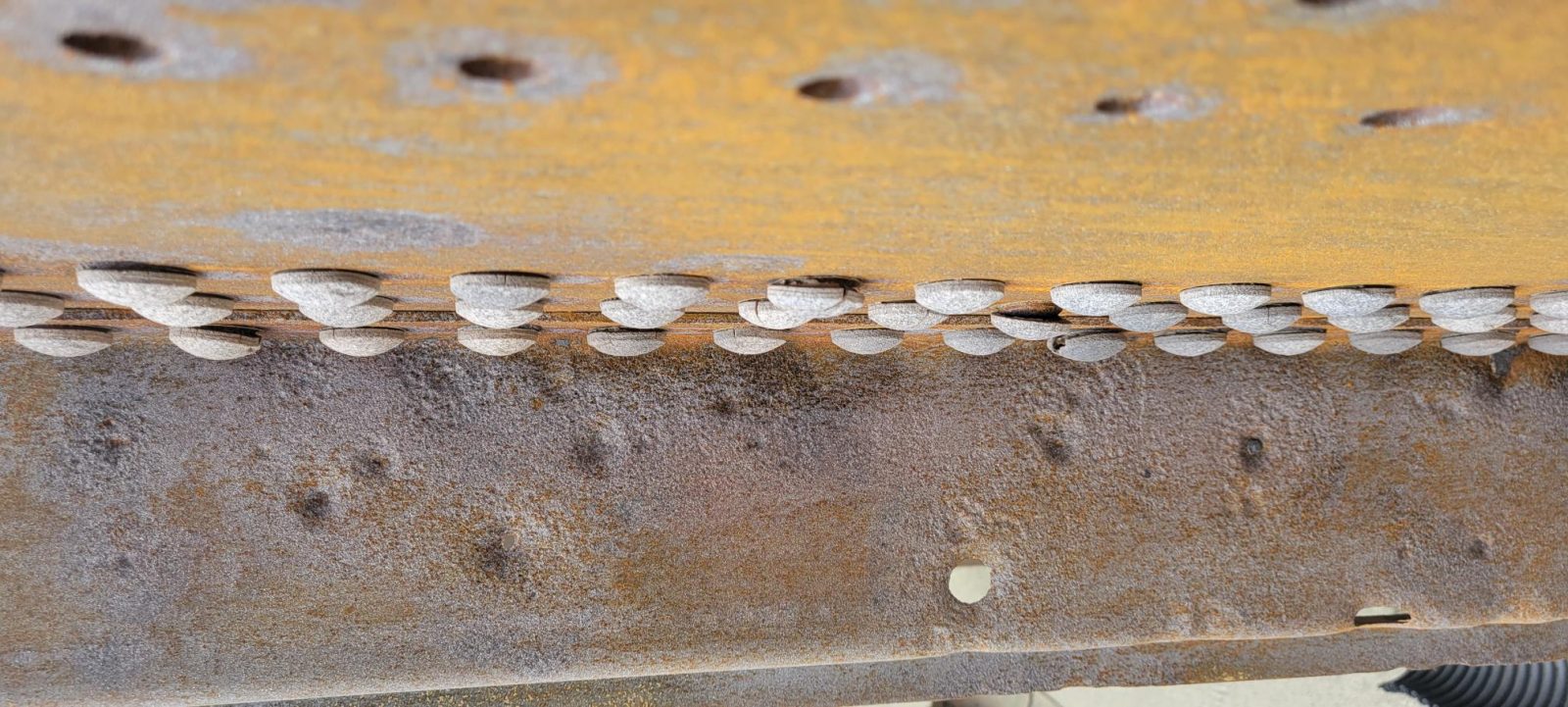
- Belly pan seams & fastener lines
- Mobile & manufactured home underbellies
- Wiring harness pass-throughs
- Fresh & waste plumbing penetrations
- Slide-out mechanism openings
- Wheel wells & inner fender returns
- Frame rails & crossmembers
- Basement bay floors
- Generator & propane compartments
- Furnace & water heater access
- Trailer tongue & jack pass-throughs
- Dealer lot inventory over winter
- Storage yard & RV park intake treatment
The Storage-Season Sequence
Where the underbody treatment fits into the layup you are already doing.
What Six Months of Storage Actually Looks Like
Late October: you park it. The unit is clean, the lines are blown out, the cover is on. From the outside nothing changes for six months.
Early November: the first hard frost pushes everything living in the surrounding field to look for somewhere warmer. Your unit is the largest insulated object within a hundred yards, it is off the ground, and it has at least a dozen openings in the floor that were engineered for wire and pipe, not for exclusion.
December through February: a rodent that got in is not idle. It is chewing — because it has to, incisors grow continuously — and it is choosing the materials that work best for that. Wiring insulation. Foam board. Upholstery batting. Duct flex. Meanwhile it is nesting and urinating in the insulation, which is the part you cannot clean out.
April: you open the door. The smell tells you first. Then the fridge does not light, or the slide will not run, or a marker light is dead — and now you are paying someone to trace a fault through a harness bundled behind a wall. The repair is labor, not parts, and it happens in the exact month every shop in your region is booked solid.
The Storage-Season Math
Why the Usual Advice Does Not Hold Up
"Put dryer sheets in it." Dryer sheets are scented fabric. Rodents shred them and use them as bedding. This one has been passed around campgrounds for thirty years and it has never worked.
"Steel wool in the holes." Genuinely useful, and worth doing on the openings you can reach. It also rusts, it falls out, and there is no chance you found all of them — a mouse can use a gap smaller than you would believe is a gap.
"Set traps before you close it up." An unchecked trap is a dead animal decomposing in a closed cabinet for four months. You will find it in April with your nose.
"Leave bait out." Same problem, worse — the animal dies wherever it happens to be, which is frequently inside a wall or under a dinette.
"Plug in an ultrasonic device." Two problems. The independent evidence is thin, and a unit in a storage row has no power.
What a stored unit actually needs is protection that requires nobody to visit it. That is the case for treating the underbody with something that bonds and stays: apply it in October, and it is still working in February whether or not anyone drove out to the lot.
Storage-Prep Work
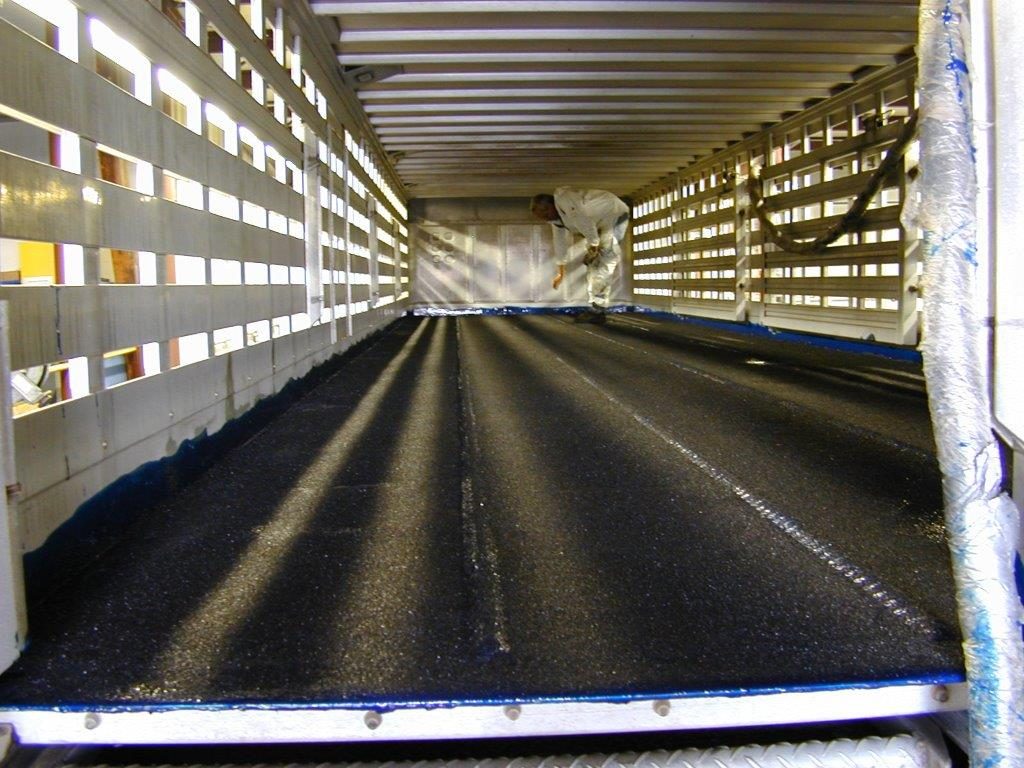

Get It Done Before the Lot Fills Up
Tell us the unit and when it goes into storage. You will get material quantity, the current technical data sheet, and pricing — plus a straight answer on whether to brush it or spray it for your situation.
Get Storage-Season PricingThe Season Business: Dealers, Service Departments & Storage Yards
Everything above is written from an owner's side of the storage season. There is a commercial side, and it runs on the same eight weeks.
Camper, RV and mobile home dealers. Inventory does not stop being vulnerable because it is unsold — it becomes more vulnerable, because nothing on a sales lot gets opened between October and April. Treating on receipt protects units you still own. Treating at PDI turns it into a pre-delivery value item you hand over with the keys. Either beats finding a chewed harness on the delivery walk-around in front of a buyer.
Service departments. Your October and November are already booked with winterization. This is one more line on a ticket the customer has already scheduled, using prep your techs already perform, and it is the rare add-on a customer is glad about the following spring.
Storage yards and RV parks. Treatment at intake is priced revenue per space with a real retention argument behind it. Rodent complaints in April are what drive non-renewals, and rodents do not respect the line between space 14 and space 15.
None of it requires equipment you do not already have. Because the gel can be brushed as well as sprayed, a porter with a bucket and a creeper can work through units out in the lot while your bays stay full — which is the difference between a program that starts this season and one that waits for a capital request.
Quoting a Season? Start Before September.
Camper, RV, trailer and mobile home dealers, service departments, storage yards and RV parks: send unit count, typical mix, and your season timing. You will get volume pricing, the current technical data sheet, and help building a per-unit cost you can price a service line against. Storage-season demand concentrates into about eight weeks, so earlier really is better.
Get Dealer & Trade PricingGet Storage-Season Pricing
Tell us about your project and we will follow up with product details, technical data sheets, and pricing.
Frequently Asked Questions
Frequently Asked Questions
What owners, dealers, service departments and storage operators ask us every September.
Timing & Storage
When should I apply it?
With the rest of your winterization, before the first sustained frost — late September through October in most of the country. The point is to treat the underbody while the decision to move in has not been made yet. Applying in spring means working against an established situation instead of preventing one.
My camper already has mice. Will this fix it?
Not on its own, and we would rather say so. A repellent discourages entry; it does not evict an established population or clean up after one. Do the remediation first — remove nesting material, clean and treat contaminated areas, repair the damage — then treat the underbody before it goes back into storage so you are not repeating the exercise next spring.
Does it help if the unit is stored indoors?
Yes, and people underestimate this. A pole barn or storage building is warmer and more sheltered than the field outside, which makes it attractive to exactly the same population. Indoor storage removes weather exposure, not rodents. The underbody is still the way in.
What if the unit sits for more than one season?
Plan a refresh. Any scent-based product depletes over time — the gel carrier stretches the interval into seasons rather than weeks, but a unit that has not moved in two years should be inspected and re-treated. The current technical data sheet carries the interval guidance; ask us and we will send it.
Damage, Prevention & Old Advice
What do rodents damage first?
Whatever is chewable and near where they got in. In practice that means wiring insulation, belly pan insulation, upholstery and mattress foam, and furnace ducting. Wiring is the expensive one, because the bill is diagnostic labor tracing an intermittent fault through a loom rather than the cost of the wire.
Do dryer sheets, peppermint oil, or moth balls work?
Dryer sheets get shredded into bedding. Loose peppermint oil on cotton balls is genuinely the right idea with the wrong delivery — it is gone in days because there is nothing holding it. Moth balls are unpleasant to live with afterward and are meant for a sealed container, not a coach. The concept behind the mint remedies is sound; the persistence is what fails, which is the entire reason for a gel carrier.
Should I still block the holes and set traps?
Block the holes, yes — steel wool and proper grommets on anything you can reach are worth the hour. Traps in a stored unit, no: an unchecked trap becomes a dead animal decomposing in a closed cabinet for months, and you will find it with your nose in April. Use exclusion plus a treated underbody, not traps you will not check.
Do I have to empty the unit completely?
Every food source, without exception — including sealed packaging, which does not read as sealed to an animal that can smell through it. Also soap, candles, and paper goods. If there is a reason to be in your camper, no coating on the frame is going to outvote it. The underbody treatment works best as one layer of three: clean it out, close the gaps, treat the underbody.
The Product & Buying It
What is in it, and is it a poison?
It is a repellent undercoating, not a rodenticide — no bait, nothing for an animal to eat. The actives are derived from mentha arvensis (wild mint) and the carrier from mentha (peppermint family), which is what makes it a gel that stays on the underbody rather than a spray that washes off.
How much do I need for my rig?
It depends on length and whether the underbody is open frame or enclosed with a belly pan — a 24-foot open trailer and a 24-foot enclosed fifth wheel are very different jobs. Send us the make, model, and length and we will work the quantity with you off the current data sheet rather than publishing a rate here that might not match the shipping formulation.
Do I need spray equipment to apply it?
No. It can be brushed on — a bucket, a brush and a creeper is enough for one unit in a driveway. Spraying is faster and worth the equipment on a long enclosed belly pan, or on a lot full of units you need treated before the ground freezes, but it is not required. Dealers and storage yards routinely start the season with brushes and decide about a rig later.
Can I do it myself?
Plenty of owners do. What it takes is safe access — jack stands and a creeper at minimum, a lift if you can get one — and doing the degreasing properly, which is the step people cut when access is awkward. If you cannot get comfortable working under the unit, have a shop do it as part of winterization.
Do you work with storage lots and dealers?
Regularly. Storage facilities treat at intake and price it as an add-on per space; dealers apply it at PDI and build it into a winterization package. Both buy at volume. Tell us your unit count and typical mix and we will quote it and help you set the per-unit cost.
What kinds of units is it used on?
Campers, RVs and motorhomes, travel trailers and fifth wheels, utility and cargo trailers, mobile and manufactured homes, park models, and work vehicles and equipment that sit between seasons. Anything with an underbody that goes unopened for months.
For Dealers, Service Departments & Storage Yards
Why should a dealer treat inventory that is not sold yet?
Because unsold inventory is the most exposed thing on the property. Nothing on a sales lot gets opened between October and April, and the unit is still yours. A harness chewed in January surfaces on the delivery walk-through in April, in front of the buyer, on the day the sale was supposed to close.
Can we sell it as part of a winterization package?
That is the most common way service departments run it. Your October and November are already booked with winterization work, the prep is the degreasing your techs already do, and it is one of the few add-ons a customer is glad about the next spring. Tell us your typical unit mix and we will help you build a defensible per-unit cost.
Does a storage yard or RV park need equipment for this?
No. Because it brushes on as well as it sprays, a yard can treat units at intake with buckets and creepers while deciding whether a spray rig is worth the capital. Applying across many units matters more than the method — rodents do not respect the line between space 14 and space 15, and one untreated unit supports traffic across the whole row.
Do mobile home dealers and communities use it?
Yes. A manufactured home's underbelly membrane is a belly pan on a much larger footprint, almost entirely overhead, inside a skirted crawl space that is awkward to get spray equipment into. Brushing a gel is the practical way to treat it.
How do we open a dealer or trade account?
Send your region, unit count, typical mix and season timing. You will get the wholesale schedule, the current technical data sheet and SDS, and WatchGuard private-label options. Storage-season demand concentrates into roughly eight weeks, so earlier conversations get better lead times.
Something Specific to Your Rig?
Describe the unit and where it is stored. We will tell you what we would actually do.
Ask a Question